Direct Hajj Enrolment Gains Ground as Saudi Arabia Transforms Pilgrimage Management
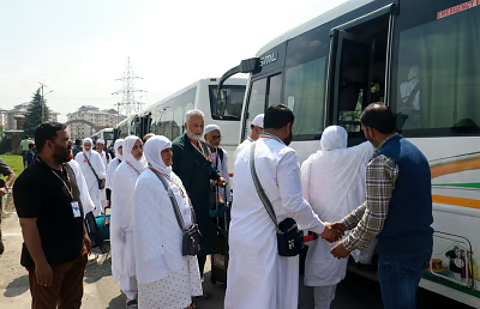
The ongoing shift in Saudi Arabia’s Hajj administration has taken a decisive turn following the Ministry of Hajj and Umrah’s recent announcement on self-registration for Muslims living in minority-country regions. The policy, unveiled last week, signals a major redesign of the global Hajj system and offers a glimpse into how future pilgrimages may be organised.
Although the Ministry has yet to publish the full list of countries affected by this phase, the operational guidelines already released point firmly to a digital-first structure that will redefine how millions of Muslims access Hajj services. The Kingdom has confirmed that the Nusuk Hajj platform stands as the sole authorised portal for the Direct Hajj Programme, allowing intending pilgrims to submit applications without any intermediary or external agent.
Saudi authorities explained that Nusuk provides an end-to-end digital process that covers registration, package selection and payment. At the moment, the portal only enables account creation, but officials say package options and booking windows will be activated in due course. Applicants are required to log on to hajj.nusuk.sa, choose their country of residence, and upload essential documents such as an international passport, a recent passport-sized photograph and proof of residence. The system also accommodates dependents, allowing one user to register up to seven family members under a single profile, while those aspiring to serve as Hajj guides can process their applications on the same platform.
This transition marks a departure from long-running state-regulated models that many countries have operated for decades. It is a bold restructuring that shifts greater responsibility to individual pilgrims and reduces the dominance of national agencies. While analysing the unfolding changes, I noted that the direct-registration approach indicates a clear detachment from traditional government-centred frameworks that previously shaped Hajj logistics across several nations.
Expectedly, some resistance has emerged. Operators in South Africa—now categorised under Muslim-minority countries for the 2026 Hajj—have expressed concerns that the model could marginalise local travel agencies. Their fears reflect the tension that naturally accompanies major structural reforms. However, the Saudi authorities maintain that the initiative aligns with Vision 2030, which prioritises digital efficiency, transparency and an improved pilgrim experience.
The developing Business-to-Client model is designed to cut off layers of intermediaries and enable Saudi-based service providers to transact directly with pilgrims globally. Industry stakeholders who fail to adapt may soon find their responsibilities restricted to supervisory roles, diplomatic coordination and welfare oversight. Several longstanding disputes surrounding the nomination of service providers could also fade once the B2C system becomes fully operational in countries like Nigeria.
The upgraded Nusuk application is already demonstrating its capacity, offering pilgrims access to accommodation choices in Makkah and Madinah, transportation across holy sites, Masha’ir packages, meal plans and even Hady payments for sacrificial animals. It also hosts educational content in multiple languages and provides real-time monitoring of each pilgrim’s Hajj journey.
Experts believe these advancements represent a deliberate attempt to streamline operations and reinforce accountability. As part of the new framework, the Ministry has introduced the “No Nusuk Permit, No Hajj” policy to ensure that every pilgrim is formally registered and accounted for during the pilgrimage. To enhance support, Saudi Arabia has trained more than 167,000 personnel and deployed them in 25 countries to offer guidance in 14 languages.
The direction is unmistakable: the global Hajj system is undergoing a profound transformation. Traditional Hajj operators, travel agencies and national institutions must evolve with the new digital landscape or risk being overshadowed by a system that is rapidly redefining how the world prepares for and experiences Hajj.