Katsina Governor’s Bold Move: Islamic Council Lauds Reinstatement of Christian Studies, Challenges Southern States to Follow Suit
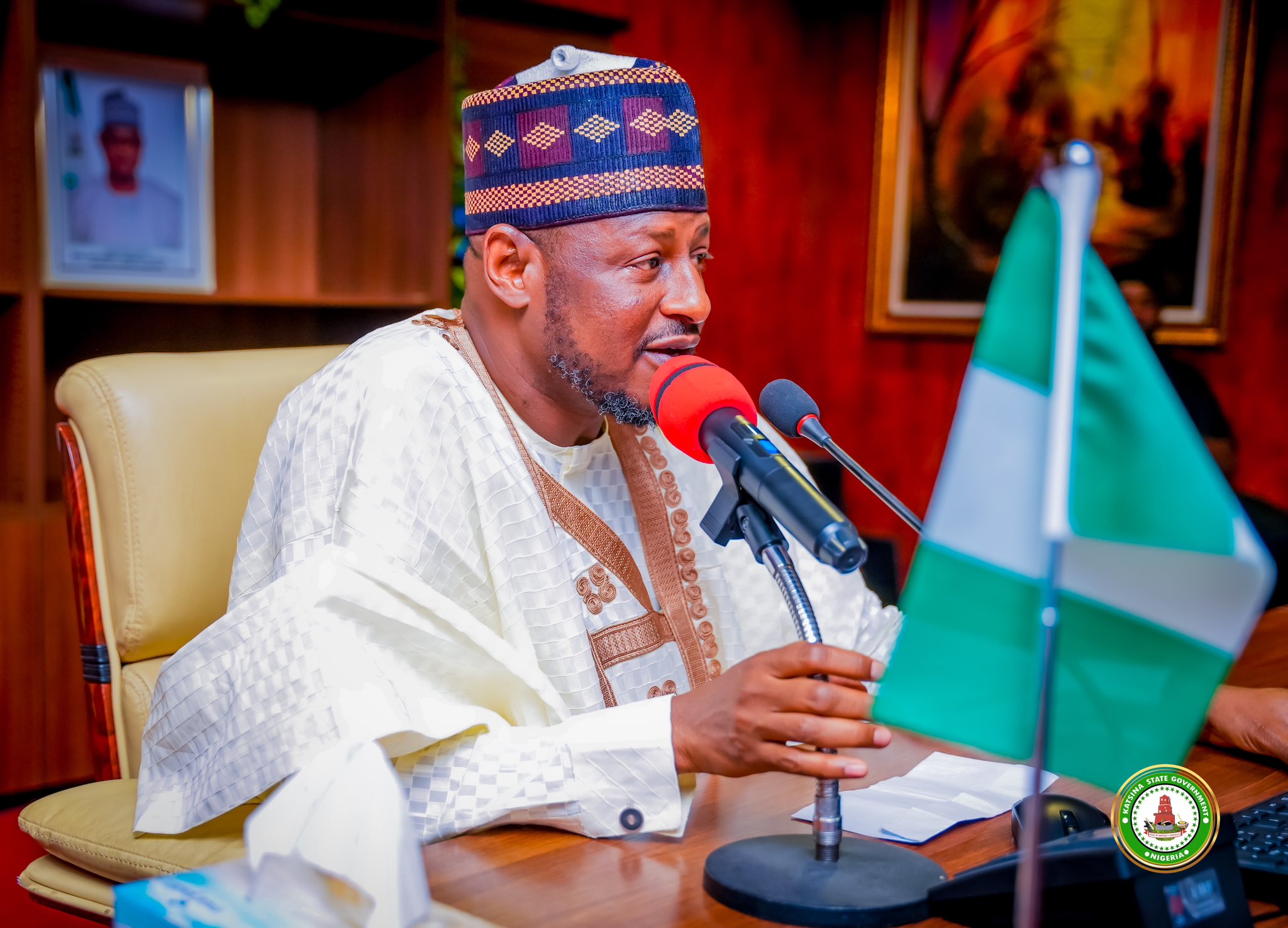
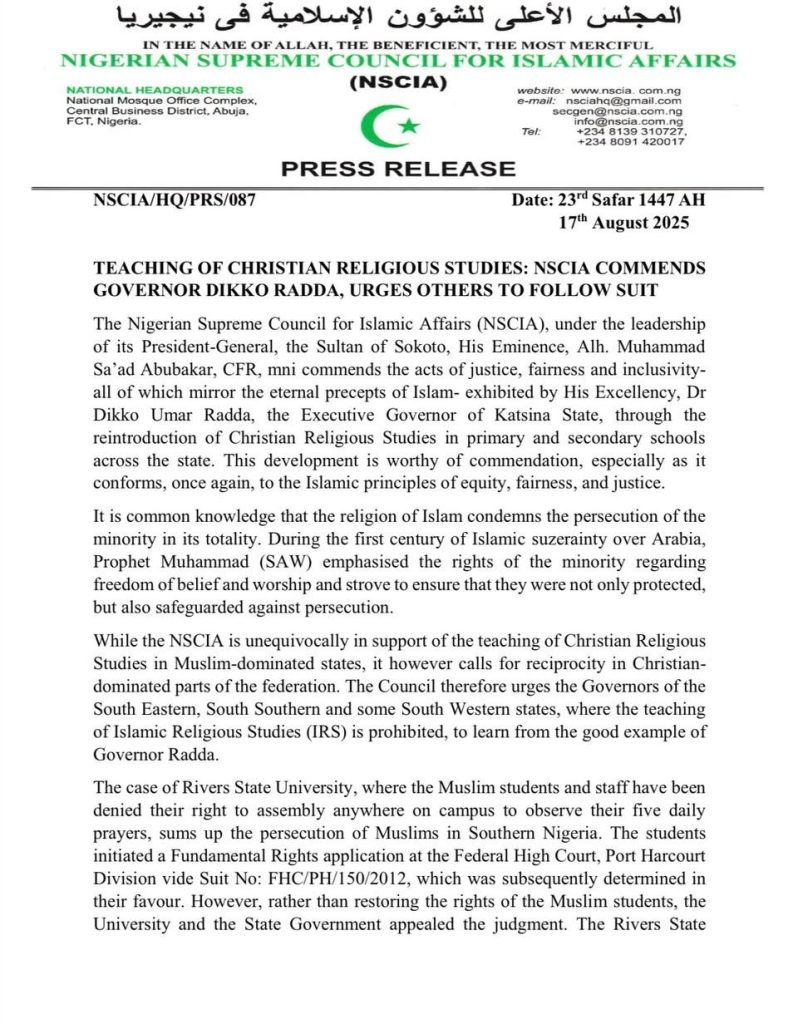
KATSINA, NIGERIA — In a move seen as a significant step toward religious inclusivity, Katsina State Governor Dikko Umar Radda has earned rare praise from the Nigerian Supreme Council for Islamic Affairs (NSCIA) for reinstating Christian Religious Studies (CRS) in the state’s primary and secondary school curriculum. The decision, officially endorsed by the Sultan of Sokoto and NSCIA President-General, Alhaji Muhammad Sa’ad Abubakar, is being hailed as a model for religious tolerance and national unity.
The NSCIA’s press release, signed by Secretary-General Prof. Is-haq Oloyede, commended the act as a reflection of Islamic principles that champion “fairness, equity, and peaceful coexistence.” This public endorsement is particularly noteworthy given the often-strained interfaith relations in Nigeria’s political sphere.
Southern States Urged to Reciprocate
While celebrating Governor Radda’s action, the NSCIA’s statement also issued a direct challenge to Christian-majority states, particularly those in the South-East, South-South, and certain parts of the South-West. The council highlighted that Islamic Religious Studies (IRS) is frequently restricted or outright banned in these regions. The NSCIA emphasized the need for a balanced approach, stating, “If CRS can be taught in Muslim-majority areas, IRS must be given equal room in Christian-dominated states.”
This call for reciprocity reflects a deep-seated frustration among Muslim communities in Southern Nigeria who feel marginalized and excluded from the public education system. The NSCIA’s statement is a clear push for equal treatment and religious freedom nationwide.
Rivers State University Case Cited as ‘Textbook Suppression’
To drive its point home, the council referenced the long-running legal battle involving Muslim students at Rivers State University. The NSCIA detailed how these students have been denied their fundamental right to gather and pray on campus, despite winning their case at both the Federal High Court and the Court of Appeal. The Rivers State Government’s decision to appeal the ruling to the Supreme Court has left the case in limbo for years, a situation the NSCIA described as a “textbook case of religious suppression.” This example serves to highlight the broader pattern of discrimination the council believes Muslims face in certain states.
The press release concluded with a powerful message, framing the entire issue as a test of national leadership. It urged political leaders to rise above religious and partisan biases, asserting that “the progress of our nation depends on a willingness to reject injustice and embrace diversity.” The NSCIA made it clear that Governor Radda has set a precedent that other leaders must follow to foster a more inclusive and unified Nigeria.