Media Ethics in Question as Sheikh Habeebullah Faces Misinformation Storm over Doctored Clip
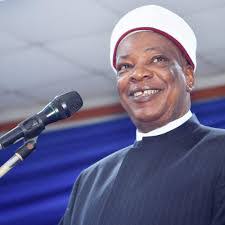
The recent controversy surrounding Sheikh Habeebullah Adam Al-Ilory, the Director of Markaz (Arabic and Islamic Training Centre) in Agege, Lagos, has once again raised serious concerns about ethical lapses in Nigerian journalism. This time, the respected Islamic scholar was at the centre of a media storm sparked by the publication of a misleading story by The Punch newspaper, which relied on a doctored video clip that was widely circulated across social media platforms.
Despite previous commendations for retracting and correcting an earlier misleading headline about the hijab policy in Jigawa State, The Punch appeared to have slipped again — publishing yet another story that lacked proper context and due diligence. The report, which initially carried a sensational headline, was based on an edited snippet of Sheikh Habeebullah’s lecture, distorted to suggest he made controversial religious statements. In reality, the cleric had been correcting extreme fatawa (Islamic rulings) issued by fringe scholars, urging for a more contextual and enlightened understanding of Islamic teachings in line with contemporary realities.
The original video, when viewed in its entirety, shows the Mudir advocating for the dispelling of outdated and erroneous beliefs, encouraging critical religious thought rooted in scriptural evidence and scholarly consensus. However, blogs and social media pages — most notably Instablog9ja — ran with the false narrative, spreading misleading interpretations and inflammatory headlines without proper verification.
In response to the widespread misrepresentation, Markaz, through its legal counsel, issued a formal notice to Instablog9ja, demanding the removal of the misleading content, publication of the full and unedited video, and a public apology across all platforms. A copy of this legal correspondence was made public, reflecting the seriousness with which the institution treats the attempt to defame its leader.
While it remains uncertain whether The Punch received a legal notice, the newspaper quietly updated the story to better reflect the scholar’s actual message. The revised lead read: “Prominent Islamic scholar and Director of Markaz, Sheikh Habeebullah Adam Al-Ilory has openly challenged long-held religious beliefs that he says no longer reflect the realities of modern Islamic societies, calling for a more progressive and informed interpretation of Islamic teachings.”
This incident once again exposes the dangers of irresponsible reporting, especially in an age where deepfakes, artificial intelligence, and the rapid spread of disinformation via social media have made it easier than ever to manipulate public opinion. The rush to attract traffic through sensational headlines often trumps the need for accuracy and integrity, particularly in digital newsrooms facing immense pressure for engagement metrics.
It is deeply troubling that many Nigerian media outlets now seem content with trading trust for clicks. The damage such reporting inflicts on public discourse is profound — individuals’ reputations are sullied, religious debates are mischaracterised, and the reading public is misled, often irreversibly. Even when corrections are made, as in this case, the original misinformation continues to exist online, reproduced across countless platforms that rarely retract or update their stories. The reputational harm remains long after the truth surfaces.
Sheikh Habeebullah, a scholar known for his contributions to Islamic education in Nigeria, has now found himself wrongfully portrayed due to what can best be described as journalistic carelessness. It is not merely an editorial oversight; it is an ethical failing. In a multi-religious and highly sensitive society like Nigeria, such distortions can sow discord, stoke unnecessary tensions, and erode confidence in both media institutions and the religious leadership they report on.
The time has come for Nigerian media practitioners to renew their commitment to professionalism and ethical responsibility. Accuracy, fairness, and balance should not be negotiable standards. Media houses must adopt stricter internal mechanisms for verification, particularly when religious figures and sentiments are involved.
Moreover, relevant regulatory authorities and national security agencies must begin to take social media regulation seriously, not from a place of censorship, but with the aim of curbing the rising tide of misinformation. The Sultan of Sokoto, Alhaji Muhammad Sa’ad Abubakar, was not far from the truth when he likened unregulated social media to a “terrorist organisation,” warning about the potential for chaos when platforms become vehicles for lies and propaganda.
Instead of dismissing such observations as alarmist, government agencies and media regulators should work collaboratively to ensure a more disciplined media landscape. The integrity of public discourse, the peace of the nation, and the honour of individuals depend on it.