
NIGERIA’S INTEREST RATE RANKS FIFTH HIGHEST GLOBALLY, SAYS MPC MEMBER
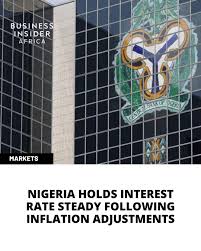
Nigeria’s Monetary Policy Rate (MPR) of 27.50 percent currently stands as the fifth highest in the world, according to Professor Mustapha Akinkunmi, a member of the Central Bank of Nigeria’s Monetary Policy Committee.
In his personal statement following the 299th MPC meeting held in February, Akinkunmi revealed that only four countries maintain higher benchmark interest rates than Nigeria: Venezuela (59.4 percent), Turkey (45 percent), Zimbabwe (35 percent), and Argentina (29 percent).
“Nigeria’s Monetary Policy Rate of 27.50 percent reflects the country’s ongoing battle with inflation, currency depreciation, and economic instability,” Akinkunmi stated in the recently released committee documents.
The current rate follows six consecutive increases implemented by the CBN throughout 2024 as part of aggressive measures to combat persistent inflation. These policy moves included raising the MPR by 875 basis points and increasing the Cash Reserve Ratio (CRR) for deposit-taking institutions by 1,750 basis points to an unprecedented 50 percent.
Despite criticism from manufacturers and industry stakeholders regarding the high borrowing costs, CBN Governor Olayemi Cardoso has defended these decisions, asserting that without such interventions, inflation could have potentially surged to 42.81 percent by December 2024.
Akinkunmi, a development economist and technology strategist, noted that emerging markets and developing economies have adopted varied approaches to monetary policy. While China and Russia have maintained rates at 3.10 percent and 21.0 percent respectively since October 2024, Brazil has increased its policy rate to 13.25 percent from 10.50 percent. Kenya reduced its rate by 50 basis points to 10.75 percent in February, while Ghana and Egypt held steady at 27.00 and 27.25 percent respectively.
The MPC member further revealed that Nigeria’s banking sector currently holds over N26.6 trillion in mandatory reserves as part of the apex bank’s strategy to limit money circulation and control inflation.
“This implies that commercial banks will be required to hold more reserves with the central bank, which directly limits the amount of money in circulation,” he explained, adding that “this could lead to a contraction in credit to the private sector, which will moderate inflationary pressures but may also slow down economic growth.”
In his analysis of deposit ownership patterns, Akinkunmi disclosed that private individuals led with 45.20 percent of total deposits in the banking system as of January 2025, while private corporations accounted for 42.07 percent. This distribution, he suggested, calls for “careful, balanced monetary policy decisions to maintain consumer confidence in the banking system.”
The oil and gas sector continues to dominate credit allocation, receiving N18 billion in facilities as of January 2025 a situation Akinkunmi believes underscores the need for “further economic diversification to reduce the economy’s vulnerability to fluctuations in oil prices and global demand.”
Fellow MPC member Bandele Amoo emphasized the importance of addressing Nigeria’s electricity infrastructure deficit to combat inflation, noting that energy challenges and exchange rate depreciation were identified in opinion surveys as key inflation drivers.
“When the government facilitates the efficient implementation of the 2023 Electricity Act to tackle the electricity infrastructure deficit in Nigeria, it will systematically moderate inflation further,” Amoo stated, adding that lower energy costs would “help to hasten the disinflationary process, potentially facilitating monetary policy easing.”
Nigeria’s economic growth is forecast at 3.2 percent for 2025, slightly below the global projection of 3.3 percent, reflecting what Akinkunmi described as “gradual improvement as the country grapples with economic challenges, including inflation, oil price fluctuations, and security concerns.”


