
Nigeria’s Money Supply Declines Slightly to ₦118.99 Trillion in May 2025
Abuja, Nigeria – June 27, 2025
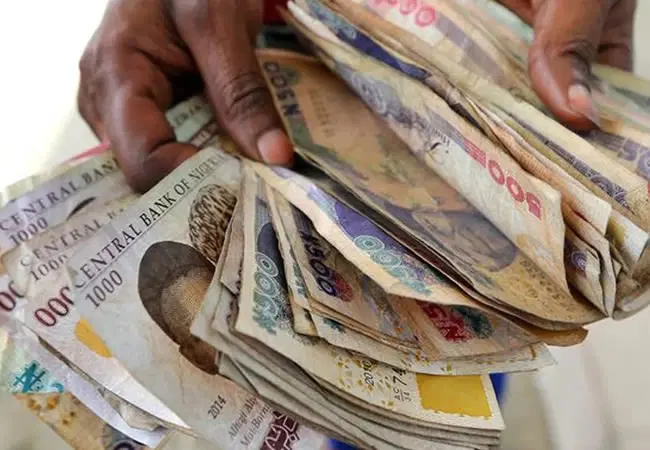
The Central Bank of Nigeria (CBN) has reported a marginal decline in the country’s money supply (M2), which stood at ₦118.99 trillion in May 2025. This represents a 0.23% drop compared to the ₦119.27 trillion recorded in April 2025.
According to the latest Money and Credit Statistics released by the CBN, the slight contraction in money supply reflects evolving liquidity conditions within the economy, as monetary authorities continue to maintain a tight policy stance in response to inflationary pressures.
A breakdown of the data shows the following:
Quasi-money (which includes savings and time deposits) increased by 0.42% to ₦78.6 trillion.
Currency outside banks rose by 0.87%, reaching ₦4.6 trillion.
Narrow money (M1) declined by 1.4% to ₦40.4 trillion.
Demand deposits fell by 1.89% to ₦35.74 trillion.
The movement in these indicators suggests that while savers are increasing their deposits, there is a slight pullback in transactional liquidity, possibly due to higher interest rates and cautious consumer spending patterns.
Analysts say the current trend is consistent with the CBN’s decision to hold the Monetary Policy Rate at 27.75%, aimed at controlling inflation which, though gradually declining, remains a key concern for policymakers.
The slight dip in M2 is notable after months of sustained increases, with April 2025 marking a record high in money supply due to expansions in net foreign assets and domestic credit.
Economic Implications
The modest reduction in money supply may contribute to a deceleration in inflation, though liquidity levels remain historically high. It also reflects the delicate balance monetary authorities are trying to maintain, ensuring enough money is circulating to stimulate economic growth without triggering excessive inflation.
As Nigeria continues its economic reforms, the CBN is expected to closely monitor monetary indicators ahead of its next Monetary Policy Committee meeting to determine whether further tightening or easing will be necessary.


