Nigeria’s Petrol Landing Cost Surges to N870, Outpacing Dangote Refinery’s Price
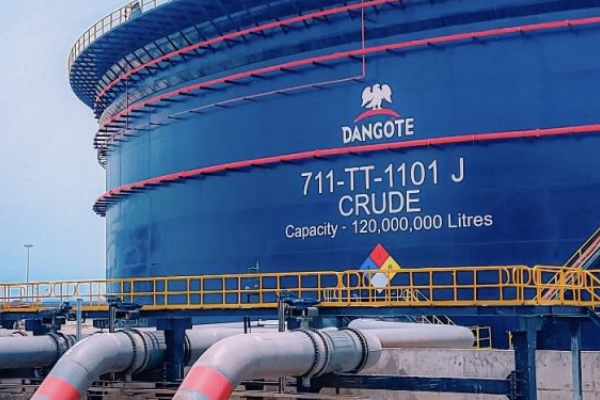
A recent development in Nigeria’s petroleum industry has seen the landing cost of petrol skyrocket to N870 per litre, significantly higher than the price offered by the Dangote refinery. This increase has raised concerns about the potential impact on fuel prices and the overall economy.
The landing cost, which includes the cost of importing petrol, has been steadily increasing over the past few weeks. The current price of N870 per litre is substantially higher than the Dangote refinery’s price, which has been a game-changer in the industry. The Dangote refinery’s price has been instrumental in providing relief to consumers and reducing the country’s dependence on imported fuel.
The surge in landing cost is attributed to various factors, including the rising cost of importing petrol and the challenges faced by the Nigerian National Petroleum Company Limited (NNPC) in managing the country’s fuel supply. The increase has sparked concerns about the potential rise in fuel prices, which could have far-reaching implications for the economy and consumers.
The Dangote refinery’s price has been a benchmark for the industry, and the current disparity between the landing cost and the refinery’s price has raised questions about the sustainability of the current pricing mechanism. Industry experts believe that the landing cost needs to be managed effectively to ensure that fuel prices remain stable and affordable for consumers.
The development has also highlighted the need for Nigeria to increase its refining capacity to reduce its dependence on imported fuel. The Dangote refinery is a step in the right direction, but more needs to be done to ensure that the country’s fuel needs are met locally. This would not only reduce the landing cost but also provide a more stable and sustainable solution for the industry.
The impact of the surge in landing cost on the economy and consumers cannot be overemphasized. An increase in fuel prices could lead to higher transportation costs, which would have a ripple effect on the prices of goods and services. This would further exacerbate the economic challenges faced by many Nigerians.
In conclusion, the surge in petrol landing cost to N870 per litre, outpacing the Dangote refinery’s price, is a development that warrants close attention. The government and industry stakeholders need to work together to ensure that fuel prices remain stable and affordable for consumers. This can be achieved by increasing refining capacity, managing the landing cost effectively, and implementing policies that promote stability in the industry.
The Way Forward
To address the challenges posed by the surge in landing cost, the government and industry stakeholders can consider the following options:
- Increase refining capacity to reduce dependence on imported fuel
- Implement policies that promote stability in the industry
- Manage the landing cost effectively to ensure that fuel prices remain stable and affordable for consumers
- Encourage investment in the downstream sector to improve efficiency and reduce costs
By working together, Nigeria can build a more sustainable and stable petroleum industry that benefits both consumers and the economy.