Presidency Refutes AfDB President Adesina’s GDP Per Capita Remarks
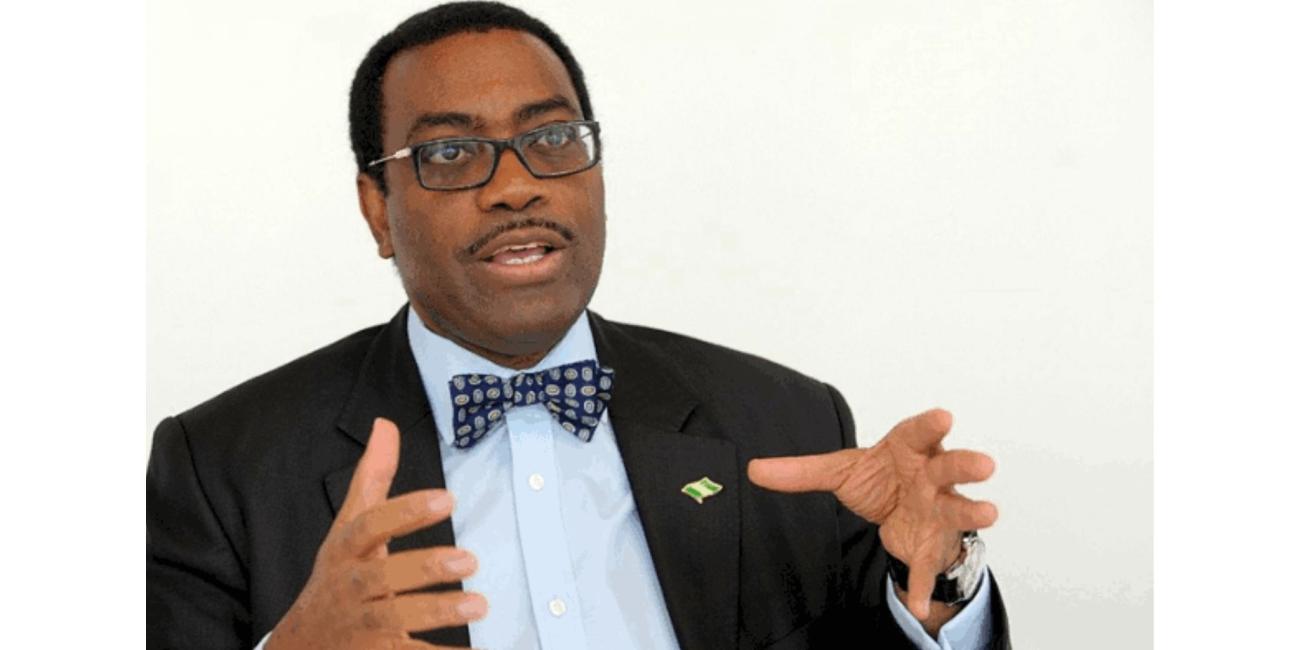
The Presidency has issued a strong rebuttal to recent comments made by the President of the African Development Bank (AfDB), Dr. Akinwumi Adesina, regarding Nigeria’s economic standing, particularly the claim that the country’s GDP per capita has significantly declined since independence in 1960.
Dr. Adesina, a former Nigerian Minister of Agriculture, had stated during a keynote address at the 20th anniversary dinner of investment firm Chapel Hill Denham in Lagos that Nigeria’s per capita GDP had dropped from $1,847 in 1960 to $824 in 2023. He argued that the figures suggest Nigerians are worse off today than they were at independence, despite decades of oil revenue and economic activity.
Reacting to the assertion, the Presidency described the claim as factually incorrect and misleading. In a statement signed by presidential spokesperson Bayo Onanuga on Sunday, the government said Dr. Adesina’s figures were “not only unverifiable but fundamentally flawed.”
According to Onanuga, verifiable historical data from institutions such as the World Bank and the Central Bank of Nigeria indicate that Nigeria’s GDP in 1960 was approximately $4.2 billion, with an estimated population of 44.9 million. This puts the GDP per capita for that year at around $93, contrary to the $1,847 quoted by Dr. Adesina.
The Presidency emphasized that Nigeria’s GDP grew substantially in the 1970s, fuelled by booming crude oil exports. By 1981, the country’s GDP had climbed to $164 billion, with per capita income peaking at $2,187. Further economic recalibrations in 2014, including a major GDP rebasing exercise, saw per capita income reach $3,200.
Onanuga also pointed out that GDP per capita does not provide a holistic picture of the well-being of citizens, as it does not factor in income distribution, informal economic activities, or access to essential services. He noted that comparing present-day Nigeria with 1960 fails to consider the massive progress made in infrastructure, education, healthcare, and digital access.
“In 1960, Nigeria had just about 18,724 telephone lines serving fewer than 45 million people. Today, more than 200 million Nigerians have access to mobile phones and internet services,” he said, highlighting improvements in connectivity and communication.
He added that the nation now boasts more universities, hospitals, and social infrastructure than it had at independence, pointing to broader socio-economic development despite persistent challenges.
The government acknowledged the need for economic reforms but cautioned against sensationalist comparisons that ignore contextual realities and progress made in various sectors.
Dr. Adesina, who has been at the helm of the AfDB since 2015, had warned of the need for Nigeria to shift from a consumption-based to a production-driven economy, if it hopes to industrialize and become globally competitive by 2050.
While the Presidency acknowledged his position as an influential voice in development finance, it urged for greater care in presenting historical economic comparisons that may not reflect the full scope of Nigeria’s developmental trajectory.