Soyinka Condemns Trump’s Threat to Deploy U.S. Troops to Nigeria
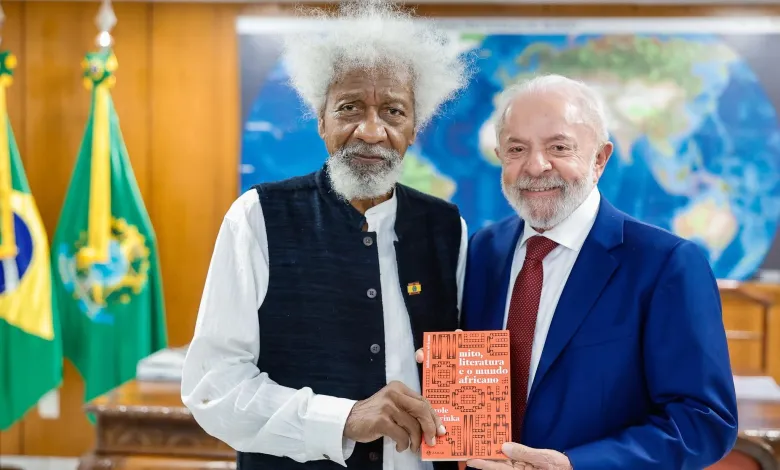
Nobel laureate Prof. Wole Soyinka has taken a firm swipe at U.S. President Donald Trump over his recent threat to send American troops to Nigeria, describing the remark as reckless and reflective of a shallow grasp of the nation’s deeply layered security crisis. Soyinka spoke in Makurdi on Friday shortly after a meeting with Benue State Governor Hyacinth Alia, where he addressed what he considered an alarming oversimplification of Nigeria’s security problems by the former U.S. president.
He argued that no foreign leader could presume to intervene militarily in Nigeria without first understanding the intricate, long-standing factors driving unrest in different parts of the country. According to him, Trump’s assertion that he would “come to help” Nigeria lacked the careful evaluation required before making such weighty declarations.
Soyinka criticised the tone and posture of the comments, warning that such language betrays a dangerous disregard for Nigerian lives and for the efforts of those already working to address the challenges. He faulted Trump’s phrasing, which suggested the possibility of an external intervention executed with speed and force but without nuance.
He questioned the rationality behind such proclamations, insisting that national leaders owe victims of violence a level of decorum, empathy and respect. Soyinka reiterated his long-held view that Nigeria’s insecurity is not driven by religious differences, but by violent extremists who manipulate faith to advance political and economic agendas.
Trump had, on October 31, designated Nigeria a “Country of Particular Concern” over alleged killings of Christians, threatening to send U.S. military forces if the situation persisted. The Nigerian government, through President Bola Tinubu, dismissed the claim as inaccurate and unrepresentative of the country’s true security reality.
Meanwhile, reactions to Trump’s comments remained divided during an open hearing convened by the U.S. House Foreign Affairs Subcommittee on Africa, where American lawmakers, religious leaders, government officials and witnesses offered sharply contrasting views on Nigeria’s redesignation and the broader implications of such a classification.