Spiritual Tide Rises at Arafat as Pilgrims Answer the Sacred Call
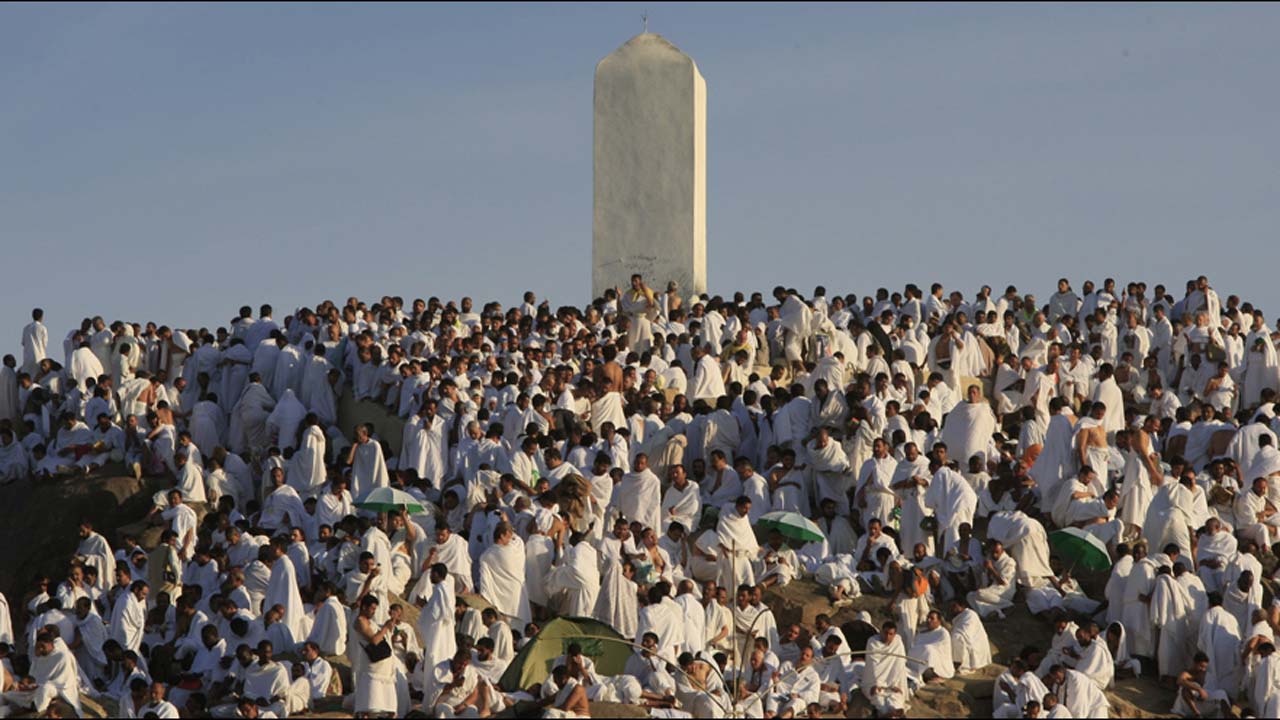
In a deeply moving display of faith and unity, waves of pilgrims, fondly referred to as the Guests of Allah, began their solemn arrival at Mount Arafat on Saturday, marking one of the most spiritually significant moments in the Islamic calendar. This sacred gathering, known as the Day of Arafat, stands at the very heart of the Hajj pilgrimage and is widely regarded as the pinnacle of the entire journey, where millions stand shoulder to shoulder in humble supplication and devotion.
The scenes in the holy lands can confirm that from the break of dawn, roads leading to the plains of Arafat were filled with a peaceful sea of white-clad worshippers. Chanting the Talbiyah, “Labbayka Allahumma Labbayk”, in unison, they arrived by bus, on foot, and in well-organised convoys under the watchful coordination of Saudi authorities. Despite the scale of the gathering, the movement remained orderly, a testament to the meticulous planning by the Saudi Ministry of Hajj and Umrah, which has continued to refine logistics year after year.
Mount Arafat, also known as Jabal al-Rahmah (the Mountain of Mercy), is where Prophet Muhammad (peace be upon him) delivered his farewell sermon more than 1,400 years ago. Today, it stands as a focal point of prayer, reflection, and deep emotional connection for Muslims who have travelled from across the globe to seek forgiveness and spiritual renewal.
The weather, though typical for the region, with high temperatures hovering above 40°C, did little to deter the faithful. Saudi emergency services and volunteers were on ground in large numbers, distributing water, umbrellas, and providing medical aid where needed. For many pilgrims from Nigeria and other parts of Africa, reaching Arafat is considered not just a physical milestone, but the very essence of Hajj itself. As Islamic teachings clearly state, “Hajj is Arafah,” signifying that anyone who fails to stand at Arafat has not fulfilled the pilgrimage.
Drone footage and aerial surveillance revealed breathtaking scenes of devotion: pilgrims with arms raised in prayer, reading Qur’an, and shedding tears as they beseeched the Almighty for mercy, forgiveness, and blessings, not just for themselves, but for their families and nations back home. The presence of various Islamic scholars delivering khutbahs (sermons) in multiple languages helped guide worshippers through the day’s rituals with clarity and purpose.
Saudi officials, in line with their ongoing commitment to ensuring the safety and comfort of all guests, maintained tight security and health protocols throughout the day. Mobile clinics, cooling stations, and continuous transportation services remained active to manage the enormous crowd effectively.
As the sun began to set on the plains of Arafat, the pilgrims prepared to move toward Muzdalifah for the next stage of the rites, collecting pebbles for the symbolic stoning of the devil in Mina. Yet for many, the emotional high point of their pilgrimage will remain this day: standing in the same place their Prophet once stood, immersed in prayer, and deeply connected to the divine.
This annual moment at Arafat is more than a ritual, it is a living, breathing testimony of faith that transcends nationality, language, and status. From the heart of Makkah to the plains of Arafat, the Hajj continues to unfold in scenes of unity, sacrifice, and spiritual elevation that no human lens can fully capture.