Zone C Customs Intensifies Trader Sensitisation, Stresses Compliance as Pillar for Nigeria’s Economic Growth
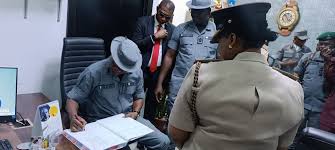
In a renewed drive to bolster Nigeria’s economic fortunes, the Nigeria Customs Service (NCS) Zone C, Port Harcourt, has called on traders, clearing agents, and bonded terminal operators to embrace strict compliance with customs regulations, positioning it as a bedrock for national economic advancement.
This message was at the heart of a one-day sensitisation workshop recently convened at the Area 11 Customs Command, Onne, where key stakeholders in the maritime sector including the Association of Nigerian Licensed Customs Agents (ANLCA), Bonded Terminal Operators, and members of the National Association of Government Approved Freight Forwarders (NAGAFF)—gathered to deliberate on customs clearance procedures, trade facilitation, and the relentless fight against smuggling.
Representing the Comptroller General of Customs, BA Adeniyi MFR, the Zonal Coordinator, ACG OC Orbih, underscored the Customs Service’s unwavering commitment to enhancing service delivery and facilitating legitimate trade.
He described the workshop as a pivotal platform for knowledge sharing and collaboration, aiming to improve the efficiency and effectiveness of customs operations across the region. According to him, “This gathering provides us with a unique opportunity to share knowledge, exchange ideas, and strengthen our collaboration to improve the efficiency and effectiveness of our operations,” a sentiment that resonated with participants who recognised the direct link between robust customs compliance and economic growth.
The Customs Service’s focus extends beyond revenue generation; it is also about creating an enabling environment for business, reducing bureaucratic bottlenecks, and ensuring that Nigeria’s ports and special economic zones are not only competitive globally but also insulated from illicit activities such as smuggling and counterfeiting.
Experiences from global economic hubs like Shenzhen and Dubai have shown that when customs agencies are actively involved in governance and stakeholder engagement, special economic zones can become powerful engines of growth, contributing billions of dollars to GDP and creating hundreds of thousands of jobs.
However, the Customs Service is acutely aware of the risks that come with lax regulation. Poorly managed zones can become breeding grounds for smuggling and other illicit trades, undermining national security and economic stability. That is why the NCS Zone C is doubling down on sensitisation and compliance enforcement, ensuring that all actors in the trade chain understand their roles and responsibilities in building a resilient economy.
The workshop concluded with a renewed call for partnership among government agencies, private sector players, and the wider trading community. The Customs Service expressed gratitude to all organisers and participants, reiterating that sustained compliance and collaboration are essential for Nigeria to unlock the full potential of its maritime and trade sectors. As Zone C Customs continues its sensitisation efforts, the message is clear: compliance is not just a legal obligation, but a strategic imperative for Nigeria’s economic prosperity.